History – The Winegrowers


There are records of vineyards at Le Terme dating back to the 1500s.

The property had been in the Astran family (our ancestors) for several generations.

In April 1918, my great-grandfather Célestin Astran bought back “Le Terme,” a property that had passed to another branch of the family following his father’s untimely death.
He had made it his mission to achieve this. He saved every penny of his wages as a vineyard worker in Pallières (Gigondas), living with his wife, who ran the village grocery store.
He worked at Le Terme for the rest of his life—a period of just twenty years—tirelessly restoring the vineyard.
His daughter Gabrielle continued the work at the estate alongside her husband, Albin Gaudin, who was a founding member of the Gigondas Cooperative Winery in 1956.

It was his grandson, Rolland Gaudin, who developed the estate by marketing bottled wines in 1978.
He bought his property in Sablet in 1971.

Rolland played a key role within the Growers’ Union in securing “Cru” status for Gigondas in 1971; he served as president of the appellation’s union from 1980 to 1995 and was the mayor of Gigondas for 25 years, between 1989 and 2014.
His wife Germaine—daughter of Jean-Louis Alexandre from Domaine les Teyssonnières—helped develop bottled wine sales for Le Terme.
Through Rolland and Germaine, both natives of Gigondas, we are related to many of the appellation’s winegrowers.

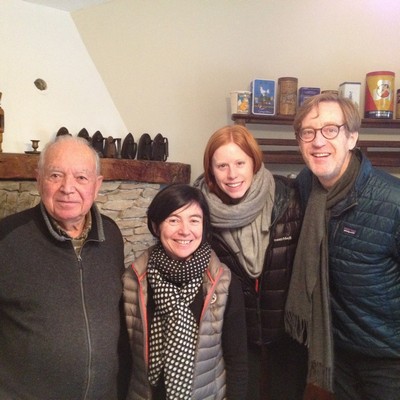
Passionate about wine, I joined the estate in 1987 after completing my diploma in wine production and marketing. That same year, I opened our tasting and sales room in the village square of Gigondas. Together with my husband—a winemaker in Châteauneuf-du-Pape—we purchased vineyards in Vacqueyras in 2003, thereby rounding out our family portfolio. Our son Henry, who is passionate about viticulture, has been working with us since the 2017 harvest; he joined the team after earning his diploma in Viticulture and Oenology, a program he completed at Château de Saint-Cosme in Gigondas. In 2019, he traveled to New Zealand to make wine at Clos Marguerite in Blenheim.

Since the summer of 2019, he has been highly motivated to work at the family estate, Domaine Familial au Terme in Gigondas, and to help his father in Châteauneuf-du-Pape from time to time.
With each generation, we appreciate the value of hard work and our deep attachment to Le Terme.

For the 2018 vintage—marking the estate’s centenary—Henry (the fifth generation) was determined to craft a “Hommage à Célestin” cuvée entirely on his own in the cellar.

This cuvée will be released one day; it will give expression to all the love we hold for our ancestors, the love for our village and its terroir, our respect, and—above all—our commitment to carrying on the legacy.

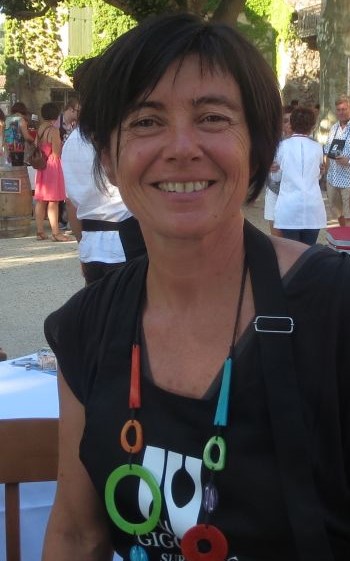
Anne-Marie Gaudin Riché, Célestin’s great-granddaughter.

Philosophy

We strive to ensure our wines reflect our love for our terroir and our craft, while respecting both the nature that sustains us and our traditions.
We believe there is no single “truth” (otherwise, everyone would know it) and that a winemaker must constantly adapt to the specific climate of the vintage and the available methods—without ruling any out if they offer clear benefits for the wine.
That is why we practice sustainable viticulture, an approach that embraces both modern progress and the methods of our ancestors.
We love pairing our meals with wine, yet we dislike wines that are overly extracted or heavily oaked. We have always sought freshness and elegance in our wines, rather than chasing passing trends.
The Vineyard

Gigondas

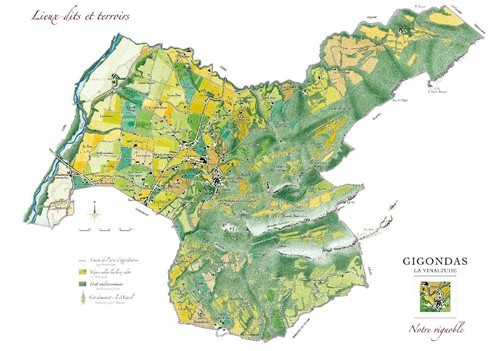
An appellation covering 1,200 hectares, classified as a *cru* since 1971, and situated entirely within the commune’s boundaries.

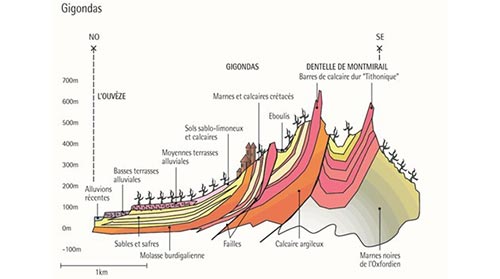
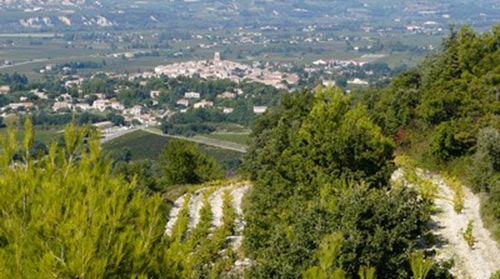
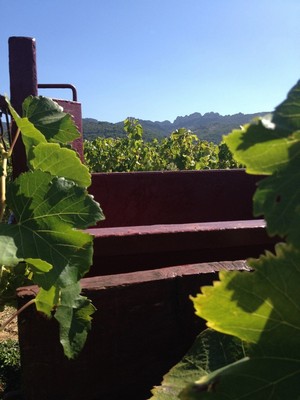
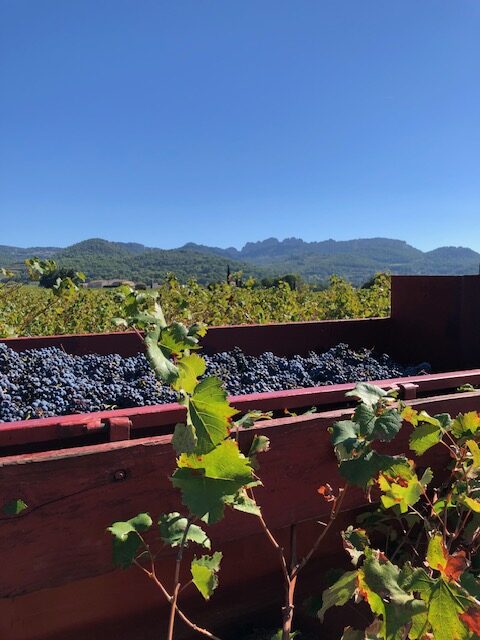
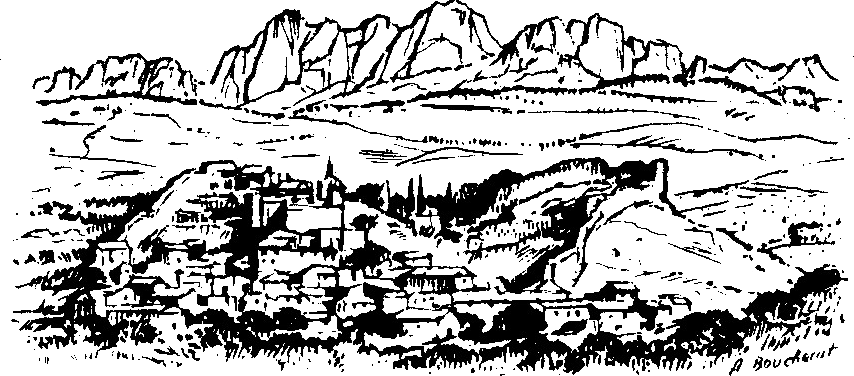
Le Terme’s 11 hectares in Gigondas are planted with Grenache, Syrah, and Mourvèdre. They are situated primarily on the historic Gigondas plateau known as “Font des Papes”—an alluvial fan fed by the Dentelles de Montmirail range—and on recent Quaternary colluvial deposits.

It is the wines from this part of the appellation that established the characteristics and renown of Gigondas wines. The common thread among the wines of this area is their power, underscored and heightened by the tannins. These are sun-drenched wines, featuring aromas of spicy black fruit and even animal notes.

The plots are located in the Santa Duc, Les Jardinères, and Les Grames areas. One Syrah plot is situated on a section of the Tertiary formation—specifically the Miocene—in the Teyssonnières area, where sands, sandstones, and marls are found.

Vacqueyras

Vacqueyras, a 1,400-hectare appellation, a *cru* since 1990

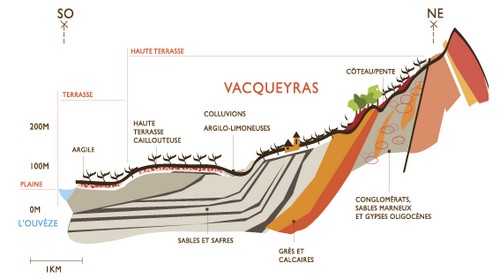
The 3 hectares of Vacqueyras belonging to Le Terme are planted with Grenache and Syrah and are situated on the Fontbonne terroir, known as the “Haute Terrasse des Garrigues.”
The majority of the Vacqueyras AOC vineyard area lies on the Garrigues terrace—a fact that underscores its importance. Accounting for over 75% of the appellation zone, it is remarkably complex.

This is a deposit of coarse material dating from the Early Quaternary (500,000 to 300,000 years ago), consisting of pebbles, gravel, sand, fine sand, and clay. The upper layers of stony debris vary in thickness from place to place, forcing the vines to root into deeper, older strata of a different composition.

This stony terrace—exposed to winds from every direction, constantly bathed in sunlight, and drawing essential nutrients and water for the vines from the subsoil—fosters balanced vine growth and the development of the powerful aromatic profile so characteristic of Vacqueyras wines.

Sablet Villages

Sablet Villages: A 300-hectare communal appellation, classified as Côtes-du-Rhône Villages in 1974.

Le Terme has all its Sablet and Côtes du Rhône vineyard plots within the commune of Sablet. A distinctive feature of “Côtes du Rhône Villages” wines that bear the name of the commune is the winemaker’s choice—within a strict and carefully considered geographical delimitation—to produce either Sablet Villages or Côtes du Rhône.

The two hectares classified as Sablet Villages are located in the area known as the *piémont* (foothills)—a territory bordering the Dentelles and encompassing the Cheval Long and La Pose *terroirs*, as well as the excellent Briguières site. The planted grape varieties include Grenache and Syrah, with Viognier grown on the highest-altitude plots.

Wines produced at the estate

Gigondas red and Gigondas rosé, Vacqueyras red, Sablet Villages red and Sablet Villages white, Côtes du Rhône red.

Appellations produced:
AOC Gigondas “red and rosé”
AOC Vacqueyras “red”
AOC Sablet Villages “red and white”
AOC Côtes du Rhône “red”

The grape varieties planted by the family are therefore those traditionally used in the respective appellations.

We remain very attentive to climate change and are trying to adapt our vineyard—for instance, by planting our new Syrah vines on the highest-altitude plots available to us. We are observing that Mourvèdre is adapting better now than it was some thirty years ago.

The Wine Cellar

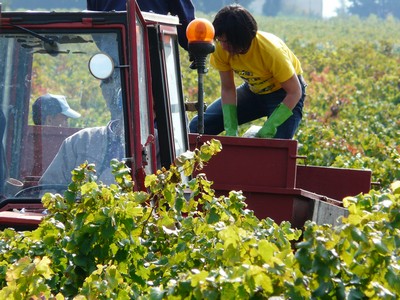
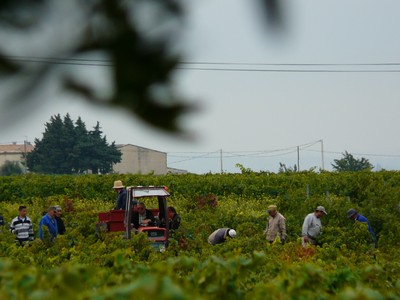
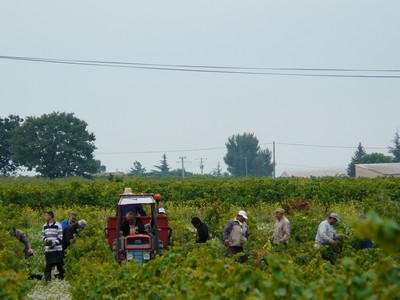
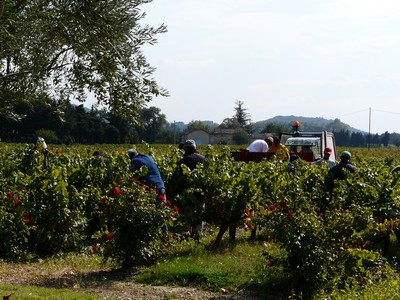
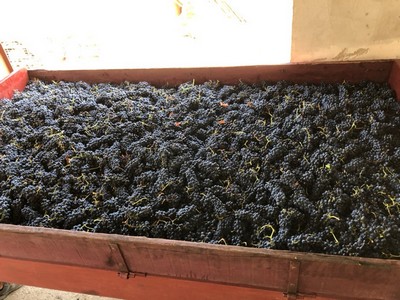
Harvesting is carried out by hand for all the appellations we produce.
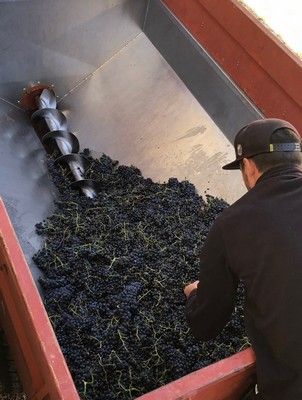
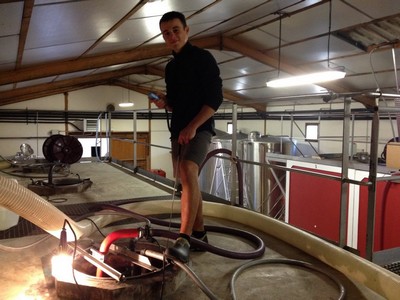
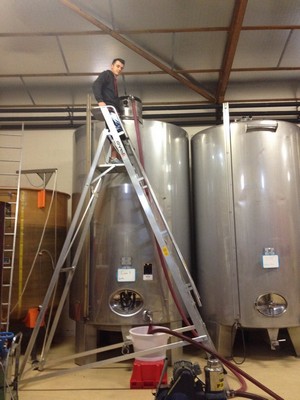
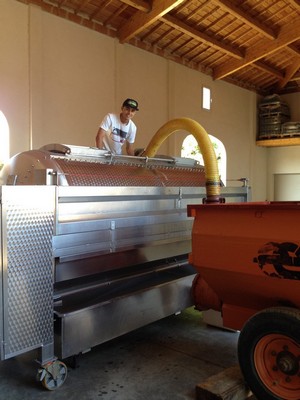
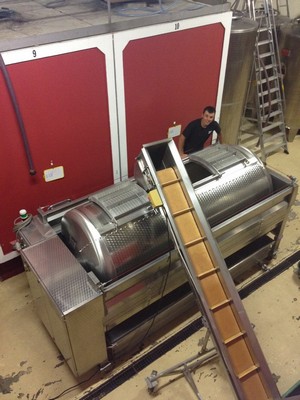
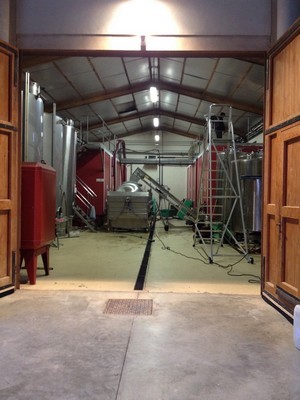
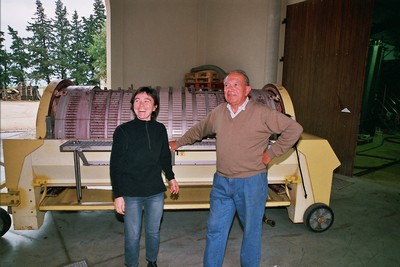
Winemaking follows traditional methods, featuring long maceration periods, strict temperature control, and rigorous monitoring. We have taken advantage of technological advances—particularly in temperature management (heating and cooling), which is crucial for winemaking—as well as a new pneumatic press, a “turbo-pigeur” ​​(mechanical punch-down device) that is highly effective for long macerations, a crusher (bringing back a tool previously abandoned by Rolland), and an “Air Pulse” system to perform gentle, controlled pump-overs during fermentation. Above all, we prioritize attentive, rigorous, and relentless monitoring at every stage of production. We adapt our practices and decisions for each vintage.
Aging varies by appellation:
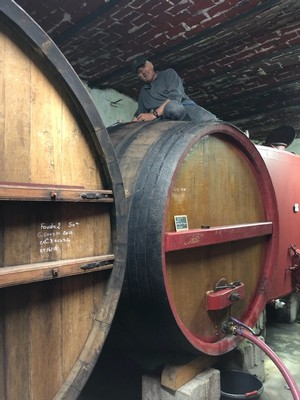
– in tank, followed by large oak casks (*foudres*) for Gigondas reds
– in tank for rosés, whites, Vacqueyras, Sablet Villages, and Côtes du Rhône.
We taste all our wines every three months—a strict, rigorous monitoring process supported by oenological analysis. Having three generations working on the estate is a tremendous asset; complemented by our oenologist, Laurent Philis, this fosters a wealth of discussion during our rounds of the cellar.

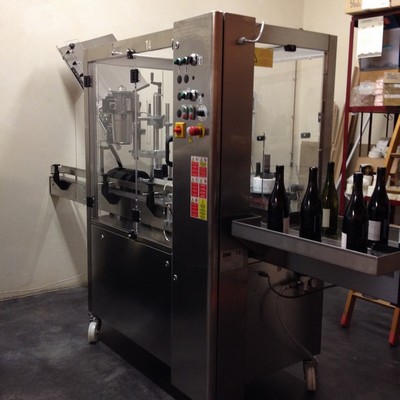
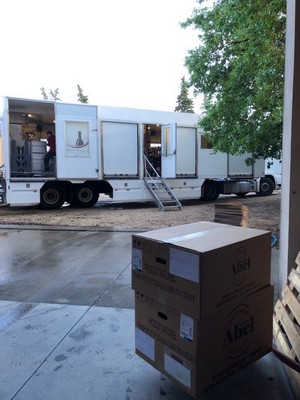
We handle the bottling and packaging ourselves, using a bottling truck that meets the latest technical and hygiene standards.

The Vintages

The 2015 vintage: An excellent vintage that will remain etched in my memory as a winemaker. The year’s weather saw no extremes, and everything unfolded relatively smoothly—just as one would wish for every year. The 2015 Gigondas wines are built for aging. Drinking them young was a mistake, given the structure, texture, and depth characteristic of great vintages.

The 2016 vintage: The 2016 was a year of small harvest, however less worse than 2013. The winter was dry and temperate, the spring experienced a series of heat and rain. Flowering was chaotic and therefore the harvest volume was down. The summer was dry and the health of the harvest was good. It is a balanced, round vintage.

The 2017 vintage: 2017 saw the smallest harvest in the history of Le Terme. The winter was mild and snow-free. Cold weather during the flowering stage caused poor fruit set (coulure) in many vineyard plots. While we avoided hail at Le Terme, the summer was exceptionally dry—rarely have we seen such dry conditions. Ripening stalled, and the harvest did not take place as early as we had anticipated. The yield was even lower than in 2013, and accommodating such small volumes in the cellar proved to be a real puzzle. The 2017 wines possess the intensity characteristic of low-yield vintages.

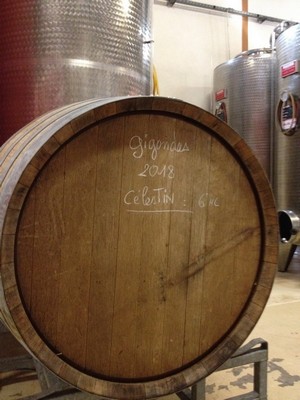
The 2018 vintage: A significant year for Le Terme, as we are celebrating the estate’s centenary (see history). Yet, beyond this historical milestone, this vintage will remain etched in my memory for its unique weather conditions. I experienced the challenging 2008 vintage, and 2018 presented a major climatic challenge—one that was historic in its own right. The spring was rainy—meaning it rained every day—followed by the south wind taking over whenever the rain stopped, bringing temperatures of 28°C. Conditions were perfect for the development of mildew, and I had never seen such severe attacks on the grape clusters. In Gigondas, the growing cycle is later than in Vacqueyras; this factor likely saved us from significant crop losses. The vines in Vacqueyras suffered more from the mildew. My father, born in 1933 and now working on his 61st harvest, had seen this happen only once before, back in the 1970s. Surprisingly, the 2018 wines do not seem to bear the same scars that the experience left on us. They are well-structured, round, and balanced, with excellent aging potential. For this vintage, Henry—handling his second vinification at Le Terme—wanted to pay tribute to our ancestor Célestin Astran, who purchased Le Terme a hundred years ago. Henry created a “Célestin” cuvée—a blend of Grenache, Syrah, and Mourvèdre—aged in *demi-muid* barrels (600 liters). We were unsure of the outcome, as we do not typically use this aging method at Le Terme. However, we subsequently received excellent feedback from Richard Hemming and Matt Walls (writing for *Decanter*), and our own tastings leave us increasingly optimistic about this cuvée… We will therefore market it one day, perhaps only in magnums… stay tuned.

The 2019 vintage: Scarcely recovered from the challenges of 2018, the 2019 vintage arrived with its own set of climatic issues. Veraison was late and uneven (particularly for the Grenache), followed by extreme weather conditions—heat and wind—that caused water stress and significant concentration effects. Although we were deeply concerned about the vineyard’s survival, we were amazed by its resilience in the face of such intense dryness. That said, we certainly wouldn’t want this to happen every summer. The harvest was not as early as usual, as acidity levels remained relatively high and ripening stalls were frequent. Berry weights were historically low, resulting in a definite lack of juice.
The wines display wonderful aromatic expression supported by a good acid balance, promising an excellent vintage in the making.